
We are continuing our study of the Book of Acts which relates to the early church’s witness to all of Judea and Samaria which began in Acts 6:8 and continues through Acts 8.
- The church scattered (Acts 8:1-40)
- The aftermath of Stephen’s stoning (Acts 8:1-3)
- Stephen’s stoning introduces us to Saul of Tarsus (Acts 7:58b & 8:1)
- This marks the beginning of the persecution of Christians
- Was this persecution a defeat to the early church?
- The Christians are scattered (Acts 8:1b)
- Philip in Samaria (Acts 8:4-24)
- His identity. He was appointed as one of the Deacons (Acts 6:5)
- His ministry in Samaria (Acts 8:4-8)
- His encounter with Simon
- His following (Acts 8:9-11)
- His observation of Philip’s ministry (Acts 8:12-13)
- Help from Jerusalem (Acts 8:4-17)
- Peter and John assist in a ministry to the new Christians
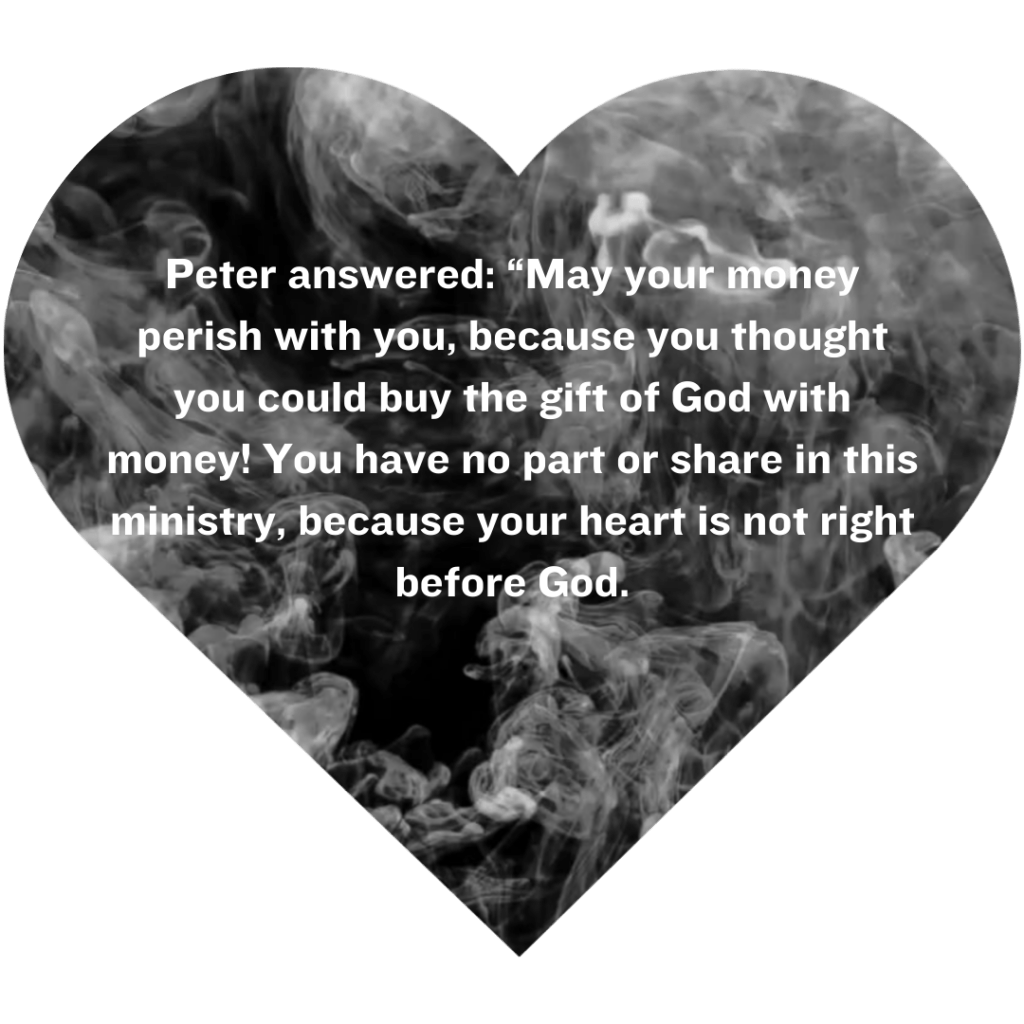
- Simon’s error (Acts 8:8-24)
- A wrong concept of the Holy Spirit and His work
- Spiritual gifts are not for personal gain
- Spiritual gifts are not for sale
- A wrong concept of the Holy Spirit and His work
- Philip and the Ethiopian (Acts 8:25-41)
- Philip is diverted in his travel (Acts 8:26)
- His obedience to the Spirit’s prompting (Acts 8:27)
- The encounter with the Ethiopian (Acts 8:28-40)
- Who He was – minister of finance to the queen (Acts 8:27)
- His activity – reading from the Scripture
- The question (Acts 8:30-31)
- The significant passage of Scripture (Acts 8:32-33 and Isaiah 53)
- Another question (Acts 8:34-35)
- The baptism (Acts 8:36-38)
- Mission completed (Acts 8:3-40)
- Philip in Samaria (Acts 8:4-24)
- The aftermath of Stephen’s stoning (Acts 8:1-3)
What is significant about Philip’s ministry about the Great Commission of Acts 1:8? Persecution was a tool God used to initiate the carriage of the Great Commission, “You shall be witnesses of Me in Jerusalem, Judea, Samaria, and to the uttermost parts of the earth”. Spirit empowerment is the means of carrying this work forward.
 Irvin's Legacy